Endurance pilates runners · HTML
Copy
Pilates for
runners.
From a 25-time marathoner and RRCA certified running coach. The practice that keeps runners running — longer, faster, and with fewer injuries.
The runner’s case
Running is
not enough.
For runners.
Running is a one-directional, repetitive activity that loads the body asymmetrically over thousands of repetitions per session. It makes you good at running. It does not address the structural foundation that running requires to be sustainable at any serious level — and without that foundation, the miles eventually catch up.
Every runner I have worked with in 30 years has arrived with the same fundamental gap: their sport-specific fitness far outpaced the structural intelligence of their body. Strong in the ways running demands. Neglected everywhere else. Classical Pilates addresses exactly that gap.
“I’ve run 25 marathons, including the 2018 Boston Marathon in historically brutal conditions. Classical Pilates is the practice that has kept me running — not just injury-free, but improving — for three decades.”
The Gratz apparatus creates training conditions that floor-based exercise cannot replicate — spring resistance that loads the body three-dimensionally, positions that access ranges of motion running never touches, and the ability to work each side independently to identify and address asymmetries before they become injuries.
What I see in
every runner’s body.
Disengaged glutes
Running does not effectively load the glutes. Over time they disengage, the hip flexors compensate, and the lower back absorbs load it was never designed to carry. Classical Pilates reactivates the glutes and teaches the body to use them in gait — immediately improving running economy and reducing lower back strain.
Locked thoracic spine
Runners lock their upper back into a narrow range. The thoracic spine loses rotation. The lumbar spine compensates. This is the mechanical origin of IT band syndrome, hip flexor tightness, and the lower back pain that plagues distance runners. Classical Pilates systematically restores thoracic rotation.
Static core, no dynamic stability
Runners who plank have static core strength. Running requires dynamic core stability — the deep system that activates in real time as the body moves through gait. These are different capacities. Classical Pilates develops the second, which actually protects the spine and pelvis under load.
Asymmetry masked by bilateral training
Most runners have a dominant side that does more work. Bilateral training masks this. Classical Pilates works each side independently, making asymmetries visible and addressable before they become the overuse injury that sidelines you for months.
Hip extension deficit
Running requires hip extension. Most runners lack it. The hip that doesn’t fully extend on push-off compensates through the lumbar spine — which is how a tight hip becomes a back problem. The Reformer creates conditions to restore hip extension that stretching alone cannot reach.
Overloaded one side
The cumulative asymmetry of thousands of strides — each one slightly favouring the dominant side — creates structural loading patterns that only become visible when they fail. Classical Pilates finds them first.
What runners gain
The runner who adds
classical Pilates.
Running economy improves
When the body stops wasting energy compensating for structural deficits, more of every stride goes toward forward propulsion. Runners report improved pace at the same perceived effort after 8-12 weeks of consistent Pilates work.
Injury rate drops
IT band, plantar fasciitis, piriformis syndrome, stress fractures — addressed before they reach the threshold of injury. Most clients report a significant reduction in the recurring issues that previously interrupted their training.
Training lifespan extends
The runners who maintain serious mileage into their 50s and 60s are the ones who added intelligent structural work. Classical Pilates is the most effective structural practice for extending a running career.
Recovery accelerates
The classical system’s emphasis on articulation and breath makes it exceptionally effective for active recovery. Runners who do Pilates the day after a long run consistently report faster recovery than passive rest.
Taught by a runner
She’s done
the miles.
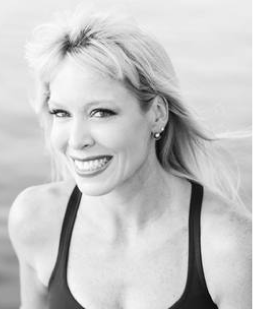
Julie is not a Pilates instructor who advises runners from the outside. She is a lifelong competitive endurance athlete — 25 marathons, an ultra-marathon, and over 2,000 training miles annually. She is also a RRCA Certified Running Coach and NASM and ACE certified personal trainer.
When Julie tells you that your left hip isn’t extending on push-off, she knows what she’s looking at — and she knows exactly which exercises on the Gratz apparatus will address it. The coaching and the Pilates inform each other in every session.
Running
Boston Marathon?
Endurance Pilates & Yoga is located in the South End — two miles from the Boylston Street finish line. We work with Boston Marathon runners year-round. In the weeks leading up to race day we focus specifically on race preparation, structural support for peak training load, and recovery optimization. If you are training for Boston, come in.