
Blog
Roll-up exercise in Pilates

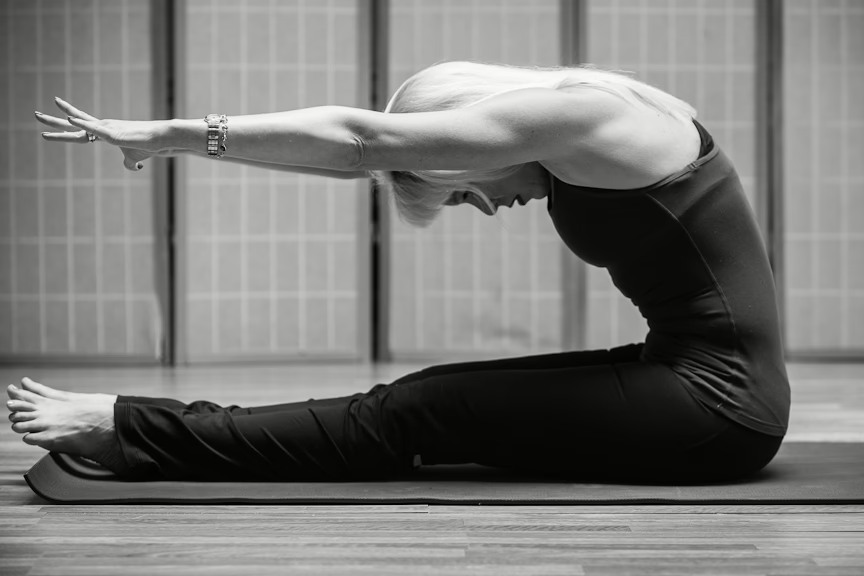
Roll-up exercise in Pilates
The roll-up exercise in Pilates is a cornerstone of core strengthening and flexibility training. It is a classic movement that embodies the essence of Pilates exercises. This exercise is renowned for its ability to enhance posture and improve spinal articulation. Julie Erickson, Owner and Founder of Endurance Pilates and Yoga LLC shares her take on this exercise- one of her favorites! Julie shares, “I can teach so many variations of the roll-up I could fill an entire hour long class. From pre-Pilates to advanced options with pulses and challenging lifted leg positions, the roll-up is an amazing exercise and appropriate for all levels of Pilates practitioner.”
Key Takeaways
A foundational Pilates movement, the roll-up builds deep core strength, improves spinal articulation and posture, and trains breath-led control. Its slow, precise sequencing supports stress relief for desk workers, flexibility and injury prevention for athletes, and mindful integration for yoga practitioners. Accessible and scalable, consistent practice makes it a reliable marker of progress and overall well-being.
For corporate executives, the roll-up offers a reprieve from the stress of desk-bound hours. It helps alleviate back pain and promotes better posture. Professional athletes find it invaluable for maintaining flexibility and preventing injuries. The controlled movement and breathwork are key to its effectiveness.
Yoga instructors can benefit by integrating the roll-up into their classes. It offers a new dimension to their teaching, blending Pilates principles with yoga. The roll-up is not just about physical benefits; it also fosters a strong mind-body connection. This exercise is accessible to all, from beginners to advanced practitioners.
With consistent practice, the roll-up can transform your Pilates routine. It is a testament to the power of Pilates in promoting overall well-being.
Summary
The roll-up is a foundational Pilates exercise that builds deep core strength, improves spinal articulation and posture, and cultivates breath-led control and mindfulness. It benefits a wide range of practitioners—from desk-bound executives seeking relief, to athletes pursuing flexibility and injury prevention, to yoga instructors integrating Pilates precision. This guide covers technique, key muscles, common mistakes, and scalable modifications and variations. Practiced regularly, the roll-up becomes a reliable measure of progress and a catalyst for overall well-being.
Understanding the Roll-Up: A Pilates Classic
The roll-up is a fundamental exercise in Pilates, renowned for its precision and effectiveness. This movement is designed to engage the core while promoting flexibility in the spine. It serves as an integral component of the classical Pilates mat repertoire.
Unlike traditional sit-ups, the roll-up focuses on a slow, controlled ascent and descent. This aspect is crucial for targeting the abdominal muscles deeply and efficiently. The emphasis on spinal articulation helps in reducing tension and improving posture.
The roll-up is often introduced early in Pilates programs due to its versatility and foundational nature. It challenges practitioners to develop control and concentration through its deliberate movements. For many, it becomes a powerful diagnostic tool, revealing areas of tightness or weakness.
Key benefits of the roll-up include:
- Enhanced core strength
- Improved flexibility
- Better posture and alignment
- Increased focus and concentration
Mastering the roll-up requires practice and attention to detail. By honing the technique, practitioners can unlock a deeper connection to their bodies, paving the way for more advanced Pilates exercises.
Anatomy of the Roll-Up: Muscles Worked and Core Engagement
The roll-up exercise intricately targets several muscle groups, making it a powerhouse for core engagement. At the heart of this movement are the abdominal muscles, primarily the rectus abdominis and transverse abdominis. These muscles work synergistically to facilitate the upward and downward phases of the exercise.
Beyond the core, the roll-up also involves other key muscle groups. The hip flexors assist in lifting the upper body off the mat, while the spinal erectors support spinal articulation. The shoulders and arms provide stabilization as they extend forward, guiding the body through each phase.
Key muscles engaged in the roll-up include:
- Rectus abdominis
- Transverse abdominis
- Hip flexors
- Spinal erectors
- Deltoids
Core engagement in the roll-up goes beyond mere strength. It is about cultivating precision and balance within the movement. Each muscle group must activate and coordinate to ensure smooth, controlled transitions. This not only enhances physical strength but also improves body awareness and posture. Through dedicated practice, the roll-up fosters a harmonious integration of breath, mind, and body.
Step-by-Step Guide: How to Perform the Roll-Up
Mastering the roll-up begins with understanding its step-by-step execution. Each phase of this exercise requires focus and precision to maximize benefits. Start by lying flat on your back on a mat, ensuring your spine is in a neutral position. Extend your legs straight and bring your feet together, keeping them relaxed. Reach your arms overhead, parallel to the floor, with your palms facing up.
Engage your abdominal muscles by pulling your navel in towards your spine. This engagement is crucial, as it provides the foundation for the movement. Begin inhaling deeply, preparing your body for the roll-up.
As you exhale, slowly lift your arms toward the ceiling and beyond, guiding your head off the mat. Concentrate on the smooth, fluid motion as you peel each vertebra off the mat, one by one. This controlled articulation is key to minimizing strain and enhancing flexibility.
Continue rolling up until you reach a seated position with your spine tall and your arms reaching forward. Your gaze should be directed over your toes, maintaining a long and aligned posture. Hold this position momentarily, appreciating the strength of your core and the stretch along your spine.
Initiate the return by inhaling deeply, maintaining core engagement. As you exhale, begin the descent. Focus on controlling the movement, ensuring your spine articulates back onto the mat gradually.
Roll down one vertebra at a time, maintaining the arm extension and abdominal contraction throughout. Complete the movement by returning to the starting position, with your arms once again extended overhead.
Checklist for performing the roll-up:
- Engage core muscles throughout
- Use controlled breath to guide movement
- Focus on spinal articulation
- Maintain continuous flow and precision
By integrating these steps into your routine, you will master the roll-up, enhancing both your core strength and flexibility. Consistent practice will eventually lead to more advanced Pilates exercises, building a sturdy foundation for overall wellness.
Common Mistakes and How to Fix Them
Performing the roll-up exercise with incorrect form can hinder progress and lead to discomfort. A frequent error is the use of momentum rather than core strength. This can strain the back and reduce the efficacy of the workout.
Another mistake involves the feet lifting off the mat. This usually happens due to inadequate abdominal engagement, which compromises stability and control. Ensuring the feet remain grounded will improve muscle activation.
A rounded or collapsed spine during the roll-up diminishes spinal articulation. This occurs when the focus is lacking on progressive vertebral movement. Aim for a smooth, sequential lift to foster proper technique.
To address these errors, consider the following tips:
- Prioritize core engagement over speed
- Maintain feet flat on the mat
- Emphasize fluid spinal articulation
- Practice slow, controlled movements
By being mindful of these pitfalls and implementing corrective actions, your roll-up execution will be more effective and rewarding. With diligence and attention to detail, you’ll enhance your Pilates practice and avoid common mistakes.
Modifications and Variations for All Levels
The roll-up exercise in Pilates can be adapted to suit varying fitness levels. Beginners might find the full roll-up challenging at first. It’s crucial to start with modifications that promote strength and control.
One simple modification is the half roll-back. This involves performing only part of the roll-up motion, ensuring the spine does not lift fully off the mat. This variation encourages core engagement while reducing strain.
For more advanced practitioners, adding resistance can intensify the exercise. Using a Pilates ring between the ankles or incorporating a resistance band can challenge stability and strength. This increases the difficulty while maintaining focus on core activation.
Another popular variation is the roll-up with arm weights. Light hand weights add an upper-body component, increasing overall muscle engagement. It’s important to use careful control to avoid compensating with momentum.
Incorporating these modifications and variations not only helps tailor the exercise to individual capabilities but also keeps the practice dynamic and progressive. Here’s a quick list of modifications and variations to consider:
- Half roll-back for beginners
- Resistance band roll-up for added challenge
- Pilates ring between ankles for stability
- Arm weights for increased upper-body engagement
By exploring these options, practitioners can continuously evolve their practice and prevent plateauing. This ensures the roll-up remains both effective and engaging for all fitness levels.
The Roll-Up for Corporate Executives: Posture, Stress Relief, and Desk Recovery
Corporate executives often face the challenge of spending long hours seated at desks. This lifestyle can lead to poor posture, back discomfort, and increased stress. Integrating the roll-up exercise into daily routines can be beneficial.
The roll-up specifically targets the core and back muscles that support proper posture. By strengthening these areas, executives can counteract the postural imbalances caused by sitting. Regular practice can lead to noticeable improvements in alignment and comfort.
Additionally, the roll-up promotes controlled breathing, which helps manage stress. Executives can use this technique to clear their minds and recharge amidst their busy schedules. The simplicity of the exercise allows it to be performed almost anywhere, making it a convenient choice.
Key Benefits for Corporate Executives:
- Enhanced posture and spinal alignment
- Reduced back pain and muscle tension
- Effective stress management through mindful breathing
Incorporating the roll-up into a regular routine can provide executives with significant physical and mental relief, empowering them to perform at their best.
The Roll-Up for Professional Athletes: Flexibility, Injury Prevention, and Performance
For professional athletes, maintaining flexibility and reducing injury risks are paramount. The roll-up exercise in Pilates serves as a powerful tool in achieving these goals. By focusing on spinal articulation and core engagement, it provides athletes with essential training advantages.
One of the key benefits of the roll-up is its ability to enhance overall flexibility. This, in turn, leads to a broader range of motion and improved performance across various sports. The precise movements required for this exercise also foster body awareness, aiding athletes in refining their technique.
Furthermore, the roll-up can play a pivotal role in injury prevention. By building a balanced and stable core, athletes are better equipped to handle the physical demands of their sports. Incorporating the roll-up into training regimens offers athletes the dual benefit of heightened performance and minimized injury risks.
Key Benefits for Professional Athletes:
- Enhanced flexibility and range of motion
- Improved technique and body awareness
- Core stability for reduced injury risk
With consistent practice, athletes can experience significant improvements, making the roll-up an invaluable addition to their training arsenal.
The Roll-Up for Yoga Instructors: Integrating Pilates Principles into Yoga Practice
Yoga instructors seeking to diversify their offerings can benefit greatly from integrating Pilates principles. The roll-up exercise in Pilates offers a unique opportunity to introduce core strengthening and precision into yoga practice. Its focus on controlled movement complements the fluidity of yoga, encouraging students to connect deeply with their bodies.
Incorporating the roll-up into a yoga class can enhance students’ body awareness. By highlighting elements like alignment and breath control, instructors can enrich the practice experience. These skills are transferable, boosting both Pilates and yoga performance.
For yoga instructors, mastering the roll-up adds an element of versatility to their teaching repertoire. It enables them to attract a wider audience by providing a blend of Pilates and yoga benefits. Through careful integration, instructors can deliver a holistic movement experience.
Ways to Integrate the Roll-Up:
- Introduce as a warm-up or core sequence
- Emphasize alignment and breath awareness
- Use as a transition between yoga poses
This integration nurtures a more mindful and balanced practice, enriching the overall journey for students and instructors alike.
Breath, Mindfulness, and the Mind-Body Connection in the Roll-Up
The roll-up exercise in Pilates emphasizes the importance of breath and mindfulness. It requires a harmonious blend of mental focus and physical control, enhancing the mind-body connection. Proper breath patterns can profoundly impact the efficacy of the roll-up, encouraging a deeper engagement with each movement.
Mindfulness in the roll-up allows practitioners to be present, focusing on each phase of the exercise. This awareness fosters both relaxation and concentration, aligning perfectly with Pilates’ core principles. The connection between mind and body is critical for achieving controlled and purposeful movements.
Key Focus Areas:
- Inhale to prepare and exhale to roll up
- Maintain a steady breath throughout
- Cultivate awareness of each spinal articulation
By embracing these concepts, practitioners can perform the roll-up with greater precision and fluidity, transforming the exercise into a meditative practice.
Progress Tracking: Using the Roll-Up to Measure Core Strength and Flexibility
The roll-up exercise in Pilates serves as an excellent gauge for assessing core strength and flexibility. Regularly incorporating this movement into your routine allows you to measure improvements over time.
By observing changes in your ability to perform the roll-up, you can track progress effectively. Successful roll-up completion with increased control and ease demonstrates enhanced muscular endurance and flexibility.
Signs of Progress:
- Smoother, more controlled movements
- Increased range of motion
- Reduced need for modifications
These indicators illustrate a stronger, more flexible core, demonstrating the transformative power of consistent Pilates practice.
Incorporating the Roll-Up into Your Pilates Routine
Integrating the roll-up into your Pilates routine is simple yet effective for overall improvement. This exercise can be included as part of a warm-up or as a standalone movement during your regular practice.
To maximize benefits, aim to practice the roll-up several times a week. This regular engagement ensures continuous progress in core strength and flexibility.
Tips for Incorporation:
- Start your session with the roll-up for optimal activation.
- Use it as a transition between other Pilates exercises.
- Pair with deep breathing for a mindfulness boost.
By including this exercise consistently, you’ll enhance your Pilates routine significantly.
Frequently Asked Questions about the Roll-Up Exercise in Pilates
The roll-up exercise often raises several questions among beginners and seasoned practitioners alike. Clarifying common concerns can enhance your practice.
Common Questions:
- Is the roll-up suitable for beginners? Yes, with proper modifications.
- How often should I practice? Two to three times a week is beneficial.
- Can the roll-up relieve back pain? Yes, when done correctly with focus on form.
Addressing these questions helps ensure a safe and effective Pilates experience. Remember, patience and consistency are key.
Conclusion: The Roll-Up as a Foundation for Lifelong Strength and Flexibility
The roll-up exercise stands as a cornerstone of effective Pilates practice. It offers profound benefits, particularly for those seeking enhanced strength and flexibility.
Incorporating the roll-up into your routine fosters a deeper connection with your core muscles. This, in turn, promotes a balanced and healthy body. Over time, this foundational exercise supports overall well-being, encouraging lifelong vitality and resilience.